
When everyone can create anything, what becomes valuable?
AI can produce a remarkable number of plausible first drafts. The harder question is how we decide which work deserves attention, trust and further effort, and how we explain that choice.
When creative production becomes more accessible, the value of a piece of work depends increasingly on the decisions that shape it: understanding its purpose, making considered choices, revising what does not work, and taking responsibility for the result. AI can help with those decisions too. What becomes more important is being able to explain and test them.
On this page10 sections
Picture a neighbourhood museum preparing a poster for an exhibition. Someone asks an image generator for a few directions. Within minutes there are dozens: refined typography, intriguing colours, dramatic compositions. Some look ready for the wall.
But the museum has a more awkward problem. People who have never visited assume its exhibitions are meant for experts. The new poster needs to change that impression. A beautiful image that makes the place look even more forbidding will miss the brief, however accomplished it appears.
A folder of convincing options can make the final decision harder. That is a useful place to start thinking about creative value in the age of AI.
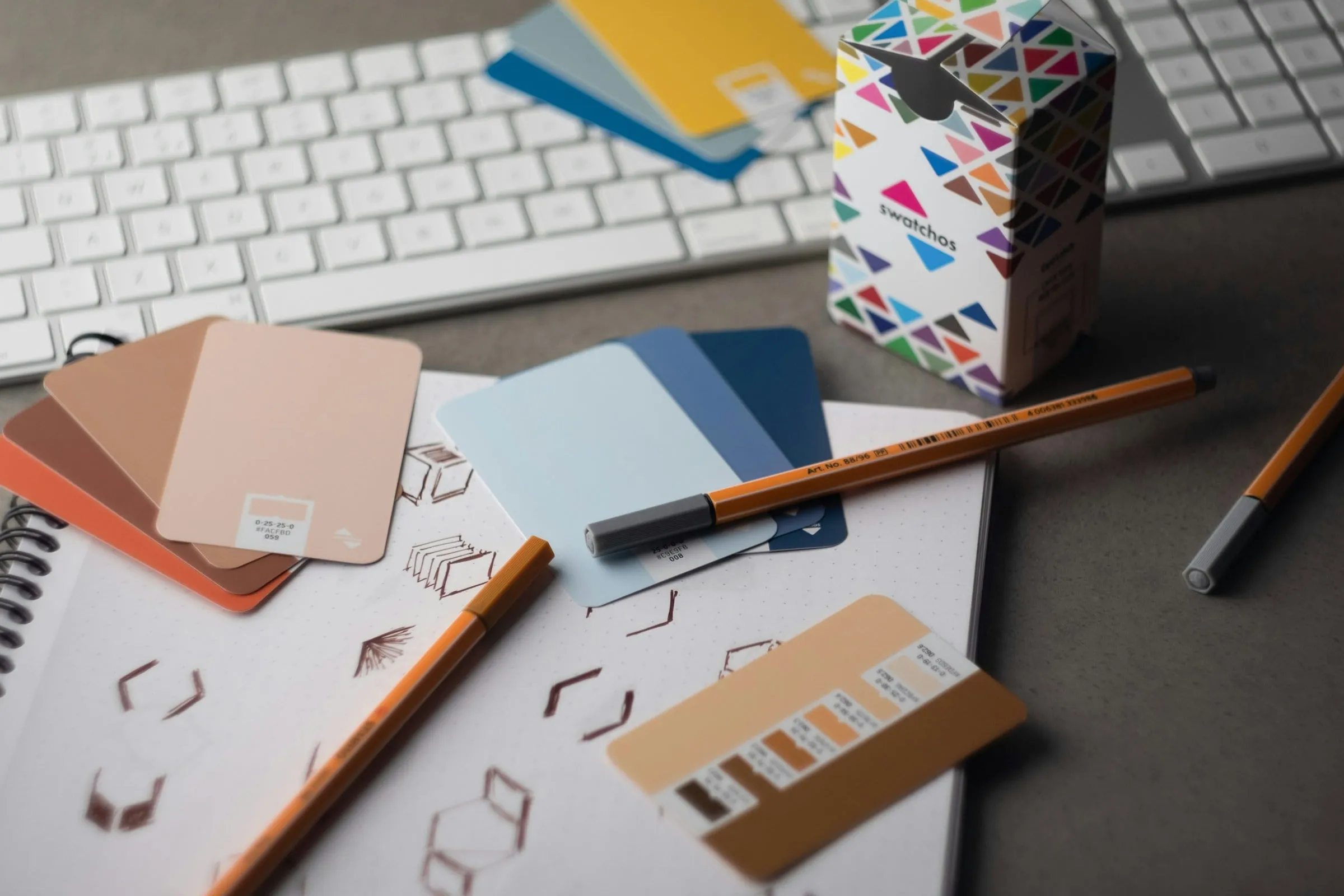 Colour samples on a designer’s desk. Andy Brown, Unsplash. Source
When making gets easier, attention does not multiply
Image, video, code and writing tools have reduced the effort required to produce certain kinds of work. They have also made it easier for people without formal training to try something ambitious. Those are real gains. A person with a story to tell no longer has to wait until they have mastered every part of the production process.
The person receiving the work, however, still has an ordinary day to get through. A reader cannot give every article an hour. A customer cannot compare fifty near-identical designs with equal care. A small organisation cannot publish every promising idea.
This problem predates generative AI. In his 1971 essay Designing Organizations for an Information-Rich World, Herbert A. Simon described the tension between plentiful information and limited human attention. The medium has changed; the tension feels familiar. More things to look at do not create more time to look at them.
The consequence is easy to overlook. Producing an option and earning someone’s attention are different achievements. As the first becomes cheaper in some settings, the second still asks for relevance, timing and a reason to care.
A polished surface alone now tells us less about the work behind it.
A better result is not always a more distinctive one
There is evidence for both the promise and the problem.
In a 2024 experiment published in Science Advances, Anil Doshi and Oliver Hauser asked participants to write short stories. Some could draw on ideas generated by an AI model. Independent evaluators rated the AI-assisted stories more favourably on several creative and writing measures, particularly for participants who had performed less well without help. Yet those stories were also more similar to one another than stories written without AI assistance.
It is a striking combination: one writer can improve their work while the overall collection becomes less varied.
The study was about short fiction under experimental conditions. It does not establish that every AI-assisted image, advertisement or design will look alike. It does, though, give us a reason to be careful about confusing individual improvement with a more interesting creative culture.
If a whole team starts with variations on the same obvious prompt, the options can become polished before anyone has worked out what makes the idea worth pursuing.
The museum poster provides a useful test. An image generator might offer fifty attractive compositions. The valuable intervention may be a question from someone who knows the audience: Why does every version make the building look so intimidating?
Judgement is more than picking your favourite
People sometimes reach for the word taste when explaining why one creative person stands out. It is a slippery word. It can mean knowledge, experience and an eye for detail. It can also be used to dismiss work without offering a reason.
Useful creative judgement is more specific. It is the ability to compare possibilities against a purpose, notice what is missing and defend a decision without pretending that every preference is an objective fact.
Our museum might need a poster that feels lively without promising an experience the exhibition cannot deliver. Someone may reject a spectacular image because it confuses visitors about what will be on show. They might keep an imperfect sketch because it suggests a better idea. They may test a headline with people who have never visited and discover that the plainest option is the easiest to understand.
None of that is made less valuable because a tool can generate another design in seconds. The tool can be part of the evaluation, too. A 2026 study in Technovation found that AI could be a consistent evaluator of creative outputs in several constrained experimental tasks, and that substituting it for one human judge did not reduce the reliability of a judging panel. That is evidence that selection is not a uniquely human skill. It does not show that an AI evaluation understands the audience or the consequences of a real campaign.
The stronger position is to use whatever helps the work improve, while keeping the reasons for the choice visible.
A real example: NASA’s imaginary travel posters
NASA’s Jet Propulsion Laboratory offers a particularly clear example of what sits behind a finished image. Its Visions of the Future series turns destinations in the solar system and beyond into travel posters. According to JPL, nine artists, designers and illustrators worked on fourteen posters, drawing on conversations with scientists, engineers and communicators. The team developed different concepts, revised them and used expert feedback to improve the results. The project’s original account describes the choices in detail.
On Mars, the design imagines the planet’s robotic explorers becoming historical attractions in a distant human future. The Venus poster imagines an observatory in the clouds, rather than pretending the planet’s surface would make a pleasant holiday. Both are imaginative, but each follows a thought-through interpretation of real science and the audience’s sense of wonder.
 Mars. Illustration: Invisible Creature. Source
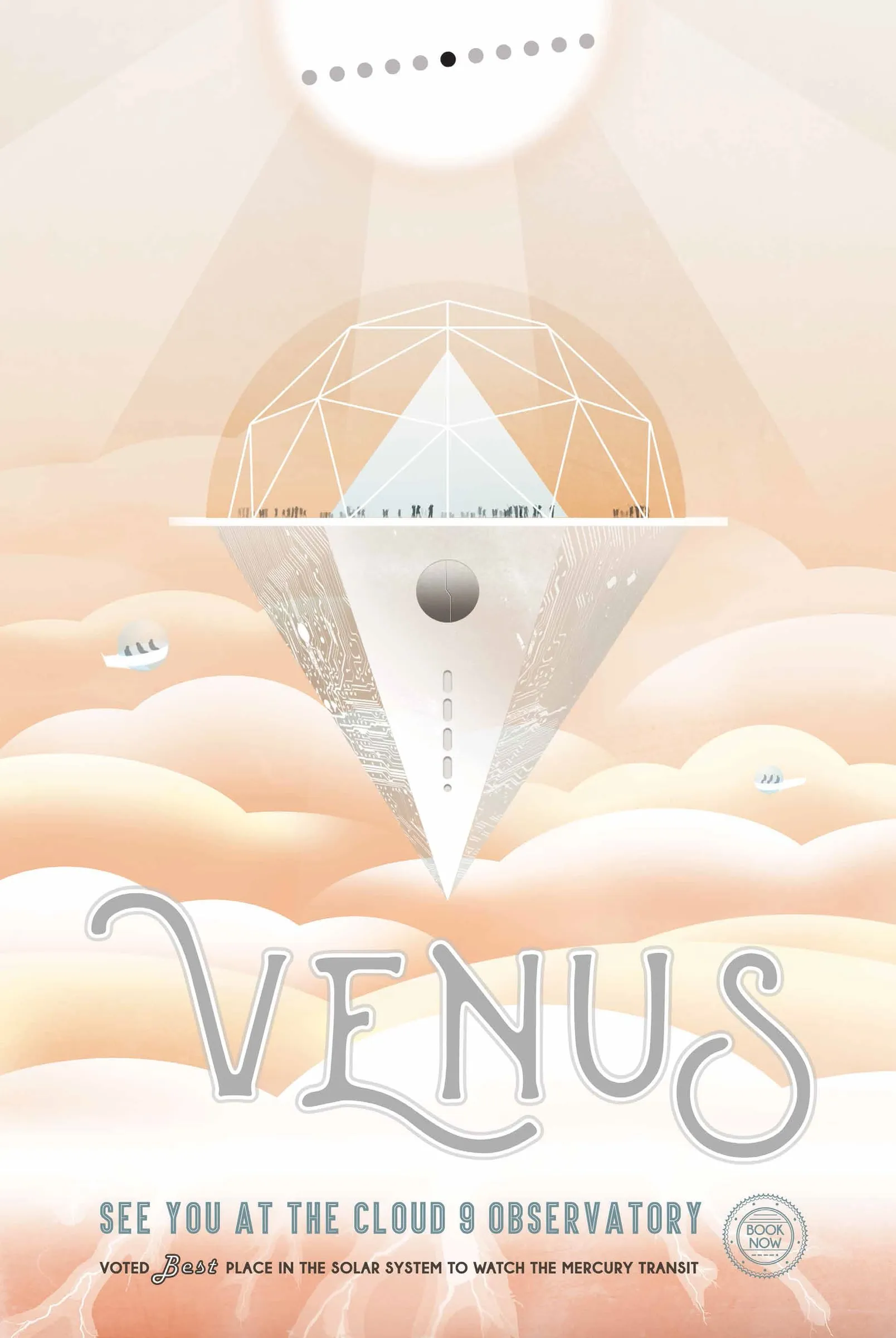 Venus. Illustration: Jessie Kawata; typography: Lois Kim. Both posters courtesy NASA/JPL-Caltech. Source
Do audiences care whether AI made the work?
There is another complication: people do not always judge creative work by its surface qualities alone. They care about how it came into being, including whether AI was involved.
In research published in 2026 in the Journal of Experimental Psychology: General, Manav Raj, Justin Berg and Rob Seamans examined responses to creative writing across 16 preregistered experiments involving about 27,000 participants. Ratings fell when participants believed a piece had been written with AI, compared with a human author working alone. The researchers linked the effect to perceived authenticity.
The experiments examined creative writing and beliefs about its authorship, so they do not show that people always prefer human-made work. They do suggest that the story of a work’s creation can influence its reception.
A photograph from a community event, a personal essay, a commissioned illustration and a generated image may all be visually effective. They do not make the same claim about witnessing something, knowing someone or representing an experience. The difference matters when audiences think they are being shown evidence rather than an illustration.
That is why provenance belongs in the conversation about creative quality. Who made the work? Which parts are generated or adapted? What sources does it rely on? Who has checked that it represents the subject fairly? Some of these questions have legal implications, which vary by jurisdiction. All of them affect how much confidence a reader can reasonably place in what they see.
In the United States, for example, the Copyright Office’s 2025 report on copyrightability, the second part of its series on copyright and AI, distinguishes AI-assisted work with sufficient human-authored expression from material generated solely through prompting. That is a jurisdiction-specific copyright position, rather than a general measure of artistic worth.
The work begins again after the first draft
Much of creative practice happens after an idea has been made visible. An editor removes a paragraph that is doing too much. A designer tests how a layout behaves on a small screen. A filmmaker finds that the most attractive sequence makes the scene harder to follow. An engineer learns that a feature nobody asked for has made a product more difficult to use.
These are not glamorous moments. They require time with the material, knowledge of the people using it and a willingness to abandon work that once seemed promising.
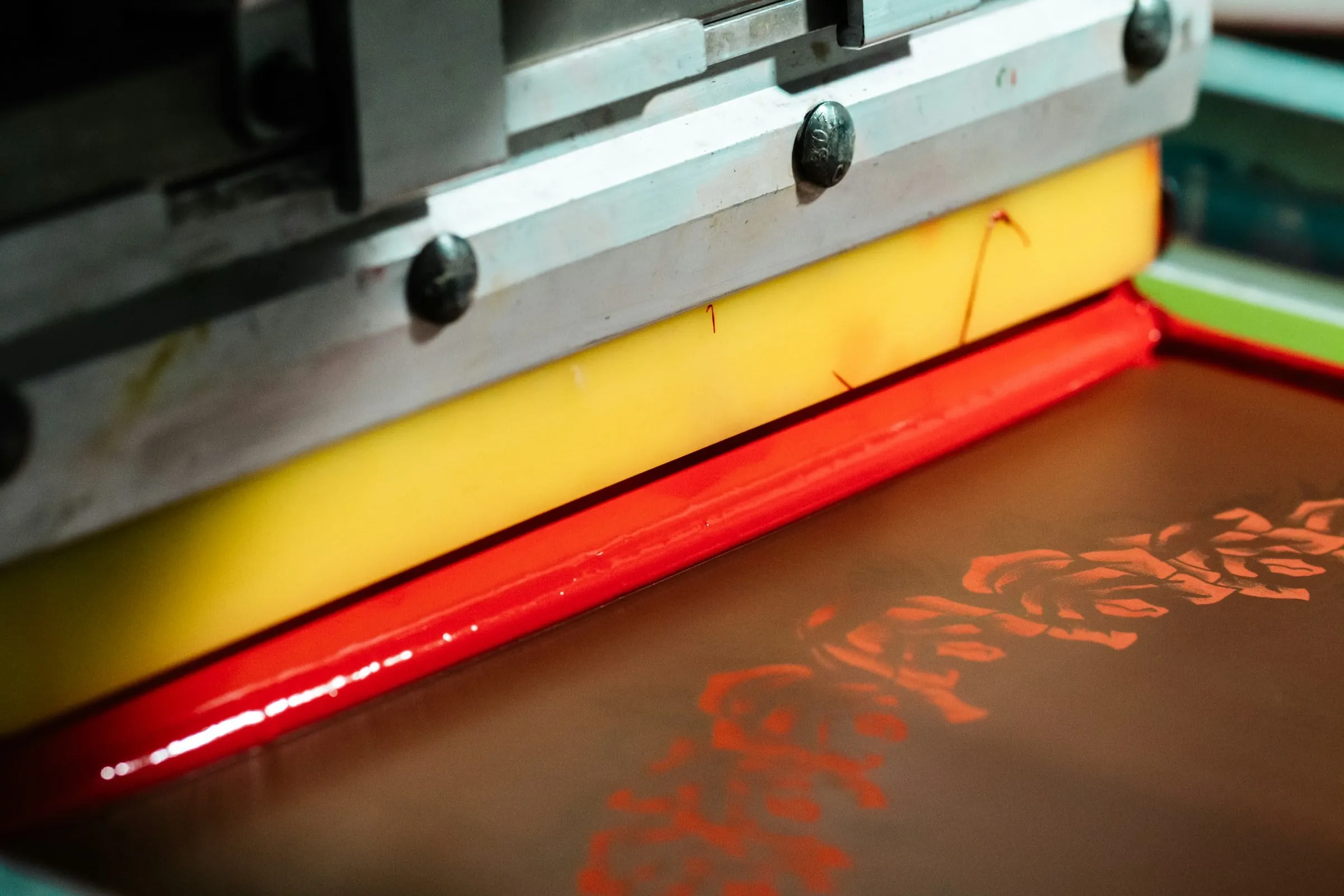 Screen printing with red ink. Anthony Roberts, Unsplash. Source
Constraints can help clarify those decisions. Research on creativity and innovation into rules, deadlines and scarce resources found the evidence fragmented and often conflicting, and sorted constraints by type and by how they act on creativity. So a fixed budget, limited format or accessibility requirement is not automatically good for creativity. It can still help show which options survive contact with reality.
AI can speed up rounds of exploration and revision. It does not remove the need to find out whether a proposed solution works. The cost of generating one more version may be low; the cost of choosing the wrong version for a real audience can still be substantial.
There is also a quieter value in doing the work repeatedly. The person who notices an awkward sentence or a misleading visual has learned to notice it. Those habits are developed through criticism, making, testing and paying attention. They cannot be reduced to how quickly the first draft arrived.
An open door should stay open
It would be easy to turn this argument into a new form of gatekeeping: now that everyone has the tools, declare that only people with exceptional taste deserve to create. That would miss one of the best things about the technology. A non-designer can finally communicate an idea visually, someone working in a second language can find a more confident starting point, and a small charity can make clear material it could never have paid for. Access to making things has value in itself, even when the results are modest.
Judgement is not a gift held by a few professionals either. People learn it by comparing alternatives, asking better questions and understanding the needs of others, and collaborators and tools that expose weaknesses can help. The goal is to widen participation while improving the decisions made along the way.
A practical test before making one more version
When an idea is moving quickly, a short review can be more valuable than another batch of outputs. Try these questions before approving a draft:
- Who is this for, specifically? Describe the people and the situation in which they will encounter it.
- What should change after they see it? Define what someone should understand, feel or be able to do.
- Which option did we reject, and why? If no one can explain the trade-off, the selection may still be arbitrary.
- What would make this misleading or difficult to use? Check the content, accessibility, context and practical constraints.
- What needs human verification? Identify factual, ethical or legal claims that cannot be left to an unreviewed generation process.
- Who will stand behind the result? Assign responsibility for corrections, upkeep and the response if it does not work.
These questions do not give you a universal standard of good work. They make a decision open to discussion and improvement.
For the museum, the final choice might be the least visually adventurous poster in the folder. Or it might be an unexpected direction no one thought to request at first. The answer comes from the people the exhibition hopes to welcome, and from what happens when the design meets them.
So what becomes valuable?
A strong first draft still matters. So do technical skill, visual imagination and the pleasure of making something simply because you want it to exist. Generative tools can extend all of those possibilities.
But a large supply of competent work changes the conversation around its value. People have to decide what to notice, what to trust and what deserves further effort. An idea gains weight when someone understands its context, shapes it with care and can account for the choices behind it.
The museum probably does not need its sixty-first poster concept. It needs one that gives a new visitor a reason to walk through the door.
Questions
Does AI make creative work less valuable?
AI does not, on its own, make creative work less valuable. It can make production more accessible and improve certain outputs. The value of a finished piece also depends on its usefulness, distinctiveness, audience, provenance and context. Those cannot be inferred from the tool used to make it.
What is creative judgement?
Creative judgement means evaluating options against a purpose, noticing what is missing, considering trade-offs and revising the work when evidence or context calls for a different choice. Personal taste plays a part, but a decision can also be explained and tested. Judgement is not a gift held by a few professionals; people learn it by comparing alternatives, asking better questions and understanding the needs of others.
Can AI develop or exercise good taste?
AI systems can compare, rank and critique creative work. A 2026 study in Technovation found AI could be a consistent evaluator of creative outputs in several constrained experimental tasks, and that substituting it for one human judge did not reduce a judging panel’s reliability. Whether a recommendation is good still depends on the brief, the people affected and the consequences of getting it wrong.
Why can AI-generated content feel similar?
AI-generated content can feel similar because models may suggest familiar patterns, and people using similar prompts can gravitate towards similar starting points. A 2024 experiment by Anil Doshi and Oliver Hauser found that AI-assisted short stories were rated more favourably but were less diverse as a collection. That finding should not be treated as a universal law of AI-generated content.
How can creators stand out when AI tools are widely available?
Creators can stand out by having a clear point of view and by being useful to a particular audience. Understand the problem, choose deliberately, test the result, credit your sources and improve the work after feedback. Better execution of a familiar direction is still a familiar direction. Distinctiveness usually becomes more credible when it serves a purpose.
Sources
- Herbert A. Simon: Designing Organizations for an Information-Rich World
- Doshi & Hauser: Generative AI enhances individual creativity but reduces the collective diversity of novel content
- Addis et al.: Evaluating creative work with artificial intelligence: Evidence from constrained innovation tasks
- Raj, Berg & Seamans: The artificial intelligence disclosure penalty: Humans persistently devalue AI-generated creative writing
- Copyright and Artificial Intelligence, Part 2: Copyrightability
- Acar, Tarakci & van Knippenberg: Creativity and Innovation Under Constraints: A Cross-Disciplinary Integrative Review